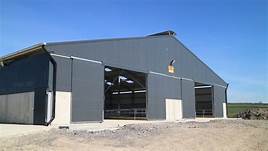
A few months ago I dispelled any myths around planning permission not being required for farm buildings. For those circumstances in which you do need planning permission here is what to look out for to help get your planning application successfully through the system.
Whilst there are many factors for the planning authority to take into account when assessing an application for agricultural development, the first milestone is to establish whether the proposal is acceptable in principle.
Firstly the farm is expected to be active and established for six years and so you will have to provide your farm business ID, farm maps and possibly other evidence to demonstrate that your business is active and established. Secondly the new development must be necessary for the efficient use of the agricultural holding.
It will be expected that the proposal will be sited beside existing buildings; however an alternative site will be permitted where it is essential for the efficient function of the business or there are demonstrable health and safety reasons. You will also have to confirm why you cannot use existing buildings on the holding.
So before making your application it is advisable to be clear on why you want the new building or structure and have a sound business reason for where you want locate it, as these will be examined in the course of the processing of your planning application.
As with all buildings in the countryside, the proposed development will also be examined in terms of its design and how it integrates into the local landscape.
Overall it is advisable to identify potential issues that may arise and to have a plan for resolving them before submitting your planning application. The following are some of the site specific issues that you may have to consider.
A common issue that arises with agricultural buildings is the potential impact on the amenity of neighbouring residences arising from noise and smell. Depending on the nature and location of your proposal, it may be advisable to have a noise and/ or odour impact assessment accompanying your planning application.
If your proposal involves a new access on to the public road network or the intensification of the use of an existing access that too will be a material consideration and the planners will consult with Transport NI.
Don’t forget that the surrounding locale may have particular built heritage or nature conservation assets which may also be taken into account in assessing your proposal.
If your application is refused planning permission you can always appeal, but before doing so you should carefully examine the reasons for refusal against the facts of your proposal, its location and your farm business.
The prevailing planning policy on agricultural and forestry development is contained in the Strategic Planning Policy Statement (SPPS) and in Planning Policy Statement 21 Sustainable Development in the Countryside (PPS 21). Both documents may be viewed at your local planning office.
Oonagh Given 22 October 2017